
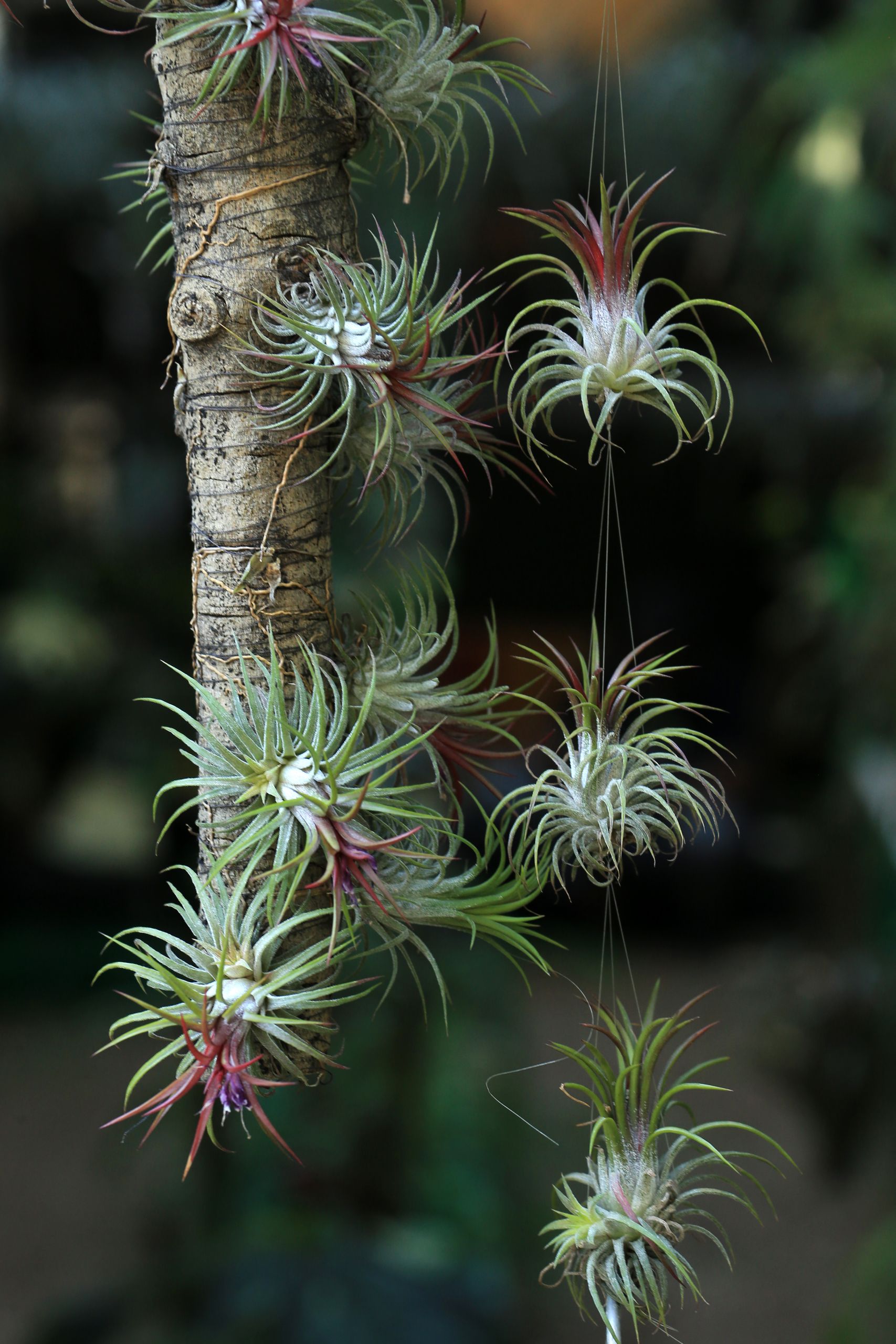
Air plants (Tillandsia) are unique plants that don’t need soil to grow. In nature, they attach themselves to trees, rocks, or other surfaces without taking nutrients from them. Instead, they absorb water and nutrients through tiny scales on their leaves.
They are epiphytes, meaning they use other objects only for support—they are not parasites and do not harm the plants or trees they grow on.
How to Care for Air Plants
🌿 Light: Bright, indirect sunlight is ideal.
💧 Water: Soak the plant in room-temperature water for 20–30 minutes once a week. In hot or dry climates, mist it between soakings if needed.
💨 Airflow: Good air circulation is essential. Let the plant dry completely within a few hours after watering by placing it upside down.
🌡️ Temperature: They prefer temperatures between 10°C and 30°C and should be protected from frost.
🌱 Feeding: A diluted bromeliad or air plant fertilizer once a month during the growing season helps keep them healthy
Why Are They So Popular?
- No soil required.
- Perfect for small spaces.
- Easy to display in glass terrariums, shells, driftwood, or hanging holders.
- Available in many shapes and sizes.
- Some varieties produce beautiful colorful flowers.
Fun Fact
Although they’re called air plants, they don’t live on air alone! They still need water, light, and nutrients—they simply absorb them differently than most plants.
Decorating With Air Plants
One of the best things about them is their flexibility. You can display them:
- In open glass terrariums
- Attached to cork bark
- In hanging holders
- On decorative stones or shells
- As part of table centerpieces